mirror of
https://github.com/garronej/ts-ci.git
synced 2025-11-30 21:43:05 +00:00

392 lines
15 KiB
Markdown
392 lines
15 KiB
Markdown
<p align="center">
|
||
<img src="https://user-images.githubusercontent.com/6702424/109354825-ab4b8e00-787e-11eb-8336-6009415ecaf6.png">
|
||
</p>
|
||
<p align="center">
|
||
<i>A template to assist you in creating and publishing TypeScript modules on NPM</i>
|
||
<br>
|
||
<br>
|
||
</p>
|
||
|
||

|
||
|
||
---
|
||
|
||
✅ NEW: The workflow is now fully portable.
|
||
✅ NEW: Only one secret has to be defined: `NPM_TOKEN` (to enable publishing on your behalf on NPM).
|
||
✅ NEW: `yarn` support, if you prefer `npm`, just delete `yarn.lock`.
|
||
✅ NEW: React ready ( `tsconfig.json` configured to transpile `.tsx` files).
|
||
|
||
# Presentation
|
||
|
||
This template automates the boring and tedious tasks of:
|
||
- Filling up the ``package.json``
|
||
- Setting up Typescript.
|
||
- Writing a [README.md](https://github.com/garronej/ts_ci/blob/main/README.template.md) with decent presentation and instructions on how to install/import your module.
|
||
- Testing on multiple Node version running on Ubuntu and Windows before publishing.
|
||
- Maintaining a CHANGELOG.
|
||
- Publishing on NPM and creating corresponding GitHub releases.
|
||
|
||
Besides, good stuff that comes with using this template:
|
||
- The `dist/` directory is not tracked on the ``main`` branch.
|
||
- Shorter specific file import path.
|
||
``import {...} from "my_module/theFile"`` instead of the usual
|
||
``import {...} from "my_module/dist/theFile"``
|
||
- CDN distribution for importing from an ``.html`` file with a ``<script>`` tag. (Optional, you can [disable](#disable-cdn-build) this feature for node projects)
|
||
- ESlint and Prettier are automatically run against files staged for commit. (Optional, you can [disable](#disable-linting-and-formatting) this feature)
|
||
|
||
# TS_CI vs [TSDX](https://github.com/formium/tsdx)
|
||
|
||
Reasons why you might want to use TS_CI over TSDX
|
||
|
||
- TSDX doesn't help you with publishing on NPM, creating GitHub releases and maintaining a CHANGELOG.md.
|
||
- TSDX bundles your module into a single minified `index.js` which is not what you want if your module is for node.
|
||
It's not even what you want if you are targeting the web because it will prevent users from cherry-picking what
|
||
they want to import from your library. Imagine how it would impact the bundle size if `material-ui` didn't let you cherry
|
||
pick what component of the lib you want to import.
|
||
That said, ts_ci do create bundle.js and ESM distribution as well.
|
||
|
||
Reasons why you might want to use TSDX
|
||
|
||
- TS_CI doesn't set up a test framework for you.
|
||
- If you want to use babel plugins like [advanced-babel-plugin-dev-expressions](https://github.com/formium/tsdx#advanced-babel-plugin-dev-expressions)
|
||
|
||
|
||
# Examples of project using this template
|
||
|
||
- [keycloakify](https://github.com/garronej/keycloakify)
|
||
- [denoify](https://github.com/garronej/denoify)
|
||
- [tss-react](https://github.com/garronej/tss-react)
|
||
- [EVT](https://github.com/garronej/evt) (uses [denoify_ci](https://github.com/garronej/denoify_ci) )
|
||
|
||
# Table of content
|
||
|
||
- [Presentation](#presentation)
|
||
- [TS_CI vs TSDX](#ts_ci-vs-tsdx)
|
||
- [Examples of project using this template](#examples-of-project-using-this-template)
|
||
- [Table of content](#table-of-content)
|
||
- [How to use](#how-to-use)
|
||
- [Fork it ( click use the template )](#fork-it--click-use-the-template-)
|
||
- [Enable automatic publishing](#enable-automatic-publishing)
|
||
- [Few things you need to be aware of before getting started](#few-things-you-need-to-be-aware-of-before-getting-started)
|
||
- [Customization:](#customization)
|
||
- [Changing the directories structure](#changing-the-directories-structure)
|
||
- [Swipe the image in the ``README.md``](#swipe-the-image-in-the-readmemd)
|
||
- [Disable linting and formatting](#disable-linting-and-formatting)
|
||
- [Disable Eslint and Prettier altogether](#disable-eslint-and-prettier-altogether)
|
||
- [Disable only Prettier](#disable-only-prettier)
|
||
- [Disable CDN build](#disable-cdn-build)
|
||
- [Completely disable](#completely-disable)
|
||
- [Only disable ES Module build ( ``dist/zz_esm/*`` )](#only-disable-es-module-build--distzz_esm-)
|
||
- [Remove unwanted dev dependencies](#remove-unwanted-dev-dependencies)
|
||
- [Customizing the Badges](#customizing-the-badges)
|
||
- [Accessing files outside the ``dist/`` directory](#accessing-files-outside-the-dist-directory)
|
||
- [The automatically updated ``CHANGELOG.md``](#the-automatically-updated-changelogmd)
|
||
- [Video demo](#video-demo)
|
||
- [Examples of auto-generated readme](#examples-of-auto-generated-readme)
|
||
- [Creating a documentation website for your project](#creating-a-documentation-website-for-your-project)
|
||
- [Creating a landing page for your project](#creating-a-landing-page-for-your-project)
|
||
|
||
# How to use
|
||
|
||
## Fork it ( click use the template )
|
||
|
||
- Click on 
|
||
- The repo name you will choose will be used as a module name for NPM so:
|
||
- Be sure it makes for a valid NPM module name.
|
||
- Check if there is not already a NPM module named like that.
|
||
- The description you provide will be the one used on NPM and in ``package.json`` ( you can change it later )
|
||
|
||
Once you've done that a GitHub action workflow will set up the ``README.md`` and the ``package.json``
|
||
for you, wait a couple of minutes for it to complete ( a bot will push ). You can follow the job advancement in the "Action" tab.
|
||
|
||
Each time you will push changes ``npm test`` will be run on remote docker containers against multiple node versions if everything passes you will get a green ``ci`` badges in your readme.
|
||
|
||
## Enable automatic publishing
|
||
|
||
Once you are ready to make your package available on NPM you
|
||
will need to provide your NPM token so that the workflow can publish on your behalf:
|
||
|
||
Go to repository ``Settings`` tab, then ``Secrets`` you will need to add a new secret:
|
||
``NPM_TOKEN``, you NPM authorization token.
|
||
|
||
To trigger publishing edit the ``package.json`` ``version`` field ( ``0.0.0``-> ``0.0.1`` for example) then push changes... that's all !
|
||
The publishing will actually be performed only if ``npm test`` passes.
|
||
|
||
# Few things you need to be aware of before getting started
|
||
|
||
- The files to include in the NPM bundle are cherry-picked using the ``package.json`` ``files`` field.
|
||
If you don't want to bother and includes everything just remove the ``files`` field from the ``package.json``.
|
||
- If you are going to programmatically load files outside of the ``dist/`` directory ( like the ``package.json`` or files inside ``res/`` ) be mindful that the paths might not be the one you expect. [Details](#accessing-files-outside-the-dist-directory).
|
||
- The template does not support ``.npmignore`` ( it use the safer ``package.json`` ``files`` instead ).
|
||
|
||
# Customization:
|
||
|
||
## Changing the directories structure
|
||
|
||
<details>
|
||
<summary>Click to expand</summary>
|
||
|
||
You can freelly change how things are organized inside the `src/` directory but be mindfull:
|
||
|
||
- If you add a new directory in `src/`: Add it to `files` in `package.json` or it wont be included in you npm bundle.
|
||
- If you change the entry point of your module (default `src/index.ts`) update `include` in the `tsconfig.esm.json` as well as `main` and `type`
|
||
in `package.json`.
|
||
|
||
</details>
|
||
|
||
## Swipe the image in the ``README.md``
|
||
|
||
<details>
|
||
<summary>Click to expand</summary>
|
||
|
||
A good way to host your repo image is to open an issue named ASSET in your project, close it, create a comment, drag and drop the picture you want to use and that's it. You have a link that you can replace in the ``README.md``.
|
||
While you are at it submit this image as *social preview* in your repos github page's settings so that when you share on
|
||
Twitter or Reddit you don't get your GitHub profile picture to show up.
|
||
|
||
</details>
|
||
|
||
## Disable linting and formatting
|
||
|
||
### Disable Eslint and Prettier altogether
|
||
|
||
<details>
|
||
<summary>Click to expand</summary>
|
||
|
||
Remove these ``package.json``'s ``scripts``:
|
||
|
||
- ``_format``
|
||
- ``format``
|
||
- ``format:check``
|
||
- ``lint:check``
|
||
- ``lint``
|
||
|
||
Remove these ``package.j`on``'s ``devDependencies``:
|
||
- ``prettier``
|
||
- ``eslint-config-prettier``
|
||
- ``eslint``
|
||
- ``@typescript-eslint/parser``
|
||
- ``@typescript-eslint/eslint-plugin``
|
||
- ``husky``
|
||
|
||
Remove the ``lint-staged`` and ``husky`` fields from the ``package.json``.
|
||
|
||
Delete these files:
|
||
- ``.prettierignore``
|
||
- ``.prettierrc.json``
|
||
- ``.eslintignore``
|
||
- ``.eslintrc.js``
|
||
|
||
In ``.github/workflows/ci.yaml`` remove the ``test_lint`` job and the line ``needs: test_lint``.
|
||
|
||
</details>
|
||
|
||
### Disable only Prettier
|
||
|
||
<details>
|
||
<summary>Click to expand</summary>
|
||
|
||
[Prettier](https://prettier.io) is opinionated, it is OK to want to break free from it.
|
||
|
||
Remove these ``scripts`` from ``package.json``:
|
||
- ``_format``
|
||
- ``format``
|
||
- ``format:check``
|
||
|
||
Remove these ``package.json``'s ``devDependencies``:
|
||
- ``prettier``
|
||
- ``eslint-config-prettier``
|
||
|
||
In the ``package.json``'s ``lint-staged`` field remove ``"*.{`s,json,md}": [ "prettier --write" ]``
|
||
|
||
From ``.eslintrc.js``, remove the line: ``"prettier/@typescript-eslint",``.
|
||
|
||
Delete these files:
|
||
- ``.prettierignore``
|
||
- ``.prettierrc.json``
|
||
|
||
In ``.github/workflows/ci.yaml`` remove the line ``npm run format:check`` from the ``test_lint`` job.
|
||
|
||
</details>
|
||
|
||
## Disable CDN build
|
||
|
||
### Completely disable
|
||
|
||
<details>
|
||
<summary>Click to expand</summary>
|
||
|
||
If your project does not target the browser or if you are not interested in offering CDN distribution:
|
||
|
||
- Remove all ``cdn:*`` npm scripts and ``npm run cdn`` from the `build` script ( in ``package.json`` ).
|
||
- Remove ``./tsconfig.esm.json``
|
||
- Remove ``simplifyify`` and ``terser`` from dev dependencies.
|
||
|
||
</details>
|
||
|
||
### Only disable ES Module build ( ``dist/zz_esm/*`` )
|
||
|
||
<details>
|
||
<summary>Click to expand</summary>
|
||
|
||
If ``npm run build`` fail because ``tsc -p tsconfig.esm.json`` gives errors you may want to remove the ESM
|
||
build but keep the ``bundle.js`` and ``bundle.min.js``. To do that:
|
||
|
||
In ``package.json`` replace theses ``scripts``:
|
||
|
||
```json
|
||
{
|
||
"cdn:bundle:.js": "simplifyify dist/index.js -s #{REPO_NAME}# -o dist/bundle.js --debug --bundle",
|
||
"cdn:bundle:.min.js": "terser dist/bundle.js -cmo dist/bundle.min.js",
|
||
"cdn:bundle": "npm run cdn:bundle:.js && npm run cdn:bundle:.min.js",
|
||
"cdn:esm": "tsc -p tsconfig.esm.json",
|
||
"cdn": "npm run cdn:bundle && npm run cdn:esm",
|
||
}
|
||
```
|
||
|
||
By theses ones:
|
||
|
||
```json
|
||
{
|
||
"cdn:.js": "simplifyify dist/index.js -s #{REPO_NAME}# -o dist/bundle.js --debug --bundle",
|
||
"cdn:.min.js": "terser dist/bundle.js -cmo dist/bundle.min.js",
|
||
"cdn": "npm run cdn:.js && npm run cdn:.min.js",
|
||
}
|
||
```
|
||
|
||
Remove ``tsconfig.esm.json``. ( file at the root of the project )
|
||
|
||
Edit the ``README.md`` to remove instructions about how to
|
||
import as ES module.
|
||
|
||
</details>
|
||
|
||
## Remove unwanted dev dependencies
|
||
|
||
<details>
|
||
<summary>Click to expand</summary>
|
||
|
||
Dev dependencies that are not required by the template ( you can safely remove them if you don't use them ):
|
||
|
||
- ``evt``
|
||
- ``@types/node``
|
||
|
||
Must keep:
|
||
|
||
- ``typescript``
|
||
- ``simplifyify`` ( for CDN build )
|
||
- ``terser`` ( for CDN build )
|
||
|
||
</details>
|
||
|
||
## Customizing the Badges
|
||
|
||
<details>
|
||
<summary>Click to expand</summary>
|
||
|
||
You can use [shields.io](https://shields.io) to create badges on metrics you would like to showcase.
|
||
|
||
</details>
|
||
|
||
# Accessing files outside the ``dist/`` directory
|
||
|
||
<details>
|
||
<summary>Click to expand</summary>
|
||
|
||
The drawback of having short import path is that the dir structure
|
||
is not exactly the same in production ( in the npm bundle ) and in development.
|
||
|
||
The files and directories in ``dist/`` will be moved to the root of the project.
|
||
|
||
As a result this won't work in production:
|
||
|
||
``src/index.ts``
|
||
```typescript
|
||
import * as fs from "fs";
|
||
import * as path from "path";
|
||
|
||
const str = fs.readFileSync(
|
||
path.join(__dirname,"..", "package.json")
|
||
).toString("utf8");
|
||
```
|
||
|
||
Because ``/dist/index.js`` will be moved to ``/index.js``
|
||
|
||
You'll have to do:
|
||
|
||
``src/index.ts``
|
||
```typescript
|
||
import * as fs from "fs";
|
||
import * as path from "path";
|
||
import { getProjectRoot } from "./tools/getProjectRoot";
|
||
|
||
const str = fs.readFileSync(
|
||
path.join(getProjectRoot(),"package.json")
|
||
).toString("utf8");
|
||
```
|
||
|
||
</details>
|
||
|
||
# The automatically updated ``CHANGELOG.md``
|
||
|
||
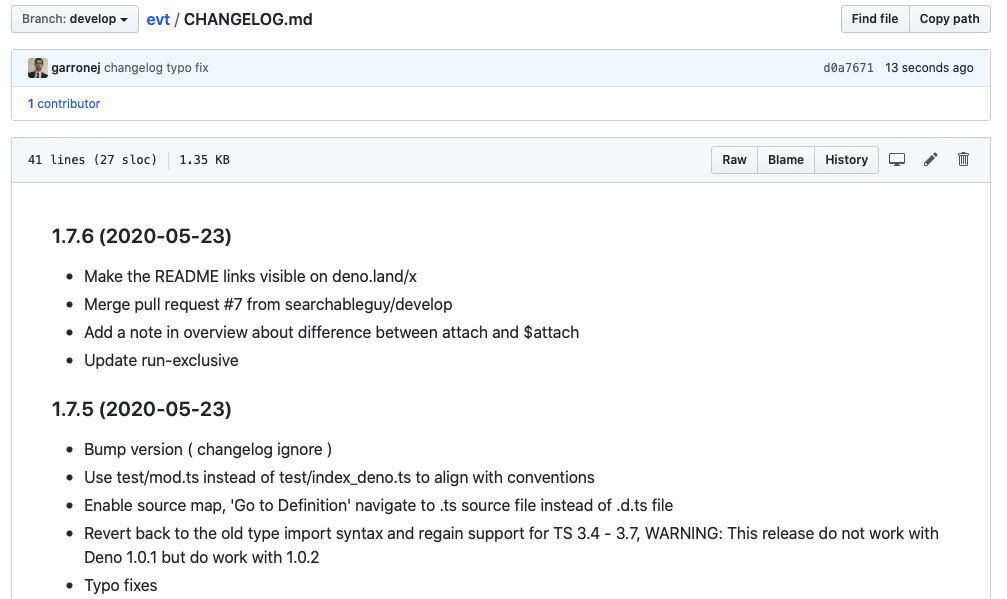
Starting from the second release, a ``CHANGELOG.md`` will be created at the root of the repo.
|
||
|
||
*Example:*
|
||
|
||
|
||
The ``CHANGELOG.md`` is built from the commits messages since last release.
|
||
|
||
Are NOT included in the ``CHANGELOG.md``:
|
||
- The commit messages that includes the word "changelog" ( non-case sensitive ).
|
||
- The commit messages that start with "Merge branch ".
|
||
- The commit messages that with "GitBook: "
|
||
|
||
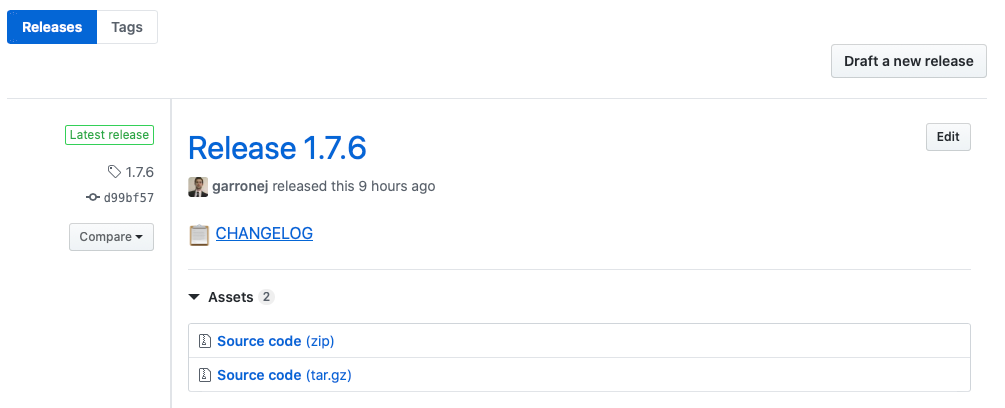
*The GitHub release will point to a freezed version of the ``CHANGELOG.md``*:
|
||
|
||
|
||
# Video demo
|
||
|
||
[](https://youtu.be/Q5t-yP2PvPA)
|
||
|
||
# Examples of auto-generated readme
|
||
|
||

|
||
|
||
# Creating a documentation website for your project
|
||
|
||
I recommend [GitBook](https://www.gitbook.com), It enables you to write your documentation in markdown from their
|
||
website and get the markdown files synchronized with your repo.
|
||
They will provide you with a nice website for which you can customize the domain name.
|
||
All this is covered by their free tier.
|
||
|
||
Example:
|
||
- [repo](https://github.com/garronej/evt)
|
||
- [GitBook documentation website](https://docs.evt.land)
|
||
|
||
I advise you to have a special directory at the root of your project where the markdown documentation files
|
||
are stored. It is configured by placing a ``.gitbook.yaml`` file at the root of the repo containing, for example:
|
||
``root: ./docs/``
|
||
|
||
Do not hesitate to request free access to premium features. Open source projects are eligible!
|
||
|
||
PS: I am not affiliated with GitBook in any way.
|
||
|
||
# Creating a landing page for your project
|
||
|
||
Beside the documentation website, you might want to have a catchy landing page to share on social networks.
|
||
You can use [GitHub pages](https://pages.github.com) to host it.
|
||
|
||
If you like the landing page of EVT, [evt.land](http://evt.land), you can fork the [repo](https://github.com/garronej/evt.land) and adapt it for your module.
|
||
|
||
To produce high quality GIF from screen recording that remain relatively small checkout the wonderful [Gifski](https://gif.ski) from [Sindre Sorhus](https://github.com/sindresorhus).
|
||
|
||
Once your page is ready you'll just have to go to settings and enable Pages yo put it online.
|
||
|
||

|
||
|
||
And update your DNS:
|
||
|
||

|
||
|
||
I personally use [Hurricane Electric](https://dns.he.net) free DNS servers because they support a lot of record types.
|
||
However, if your DNS provider does not support ``ALIAS``, you can use ``A`` records and manually enter the IP of GitHub servers.
|
||
I let you consult the [GitHub Pages Documentation](https://help.github.com/en/github/working-with-github-pages/managing-a-custom-domain-for-your-github-pages-site#configuring-an-apex-domain).
|